


ABOUT THE PROJECT
A Spanish benchmark in floating energy innovation.
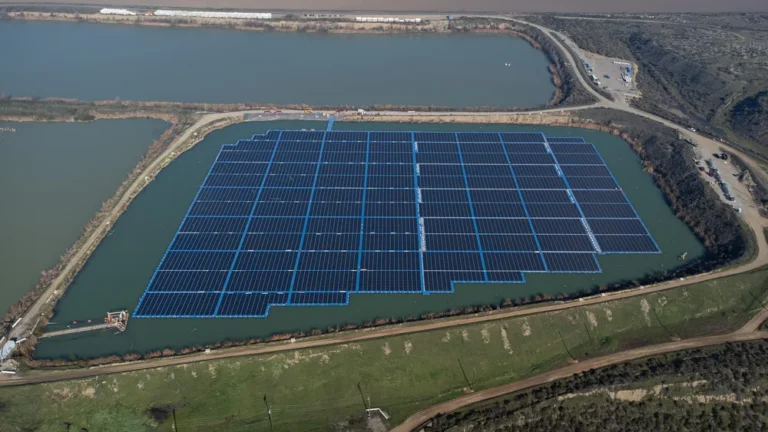
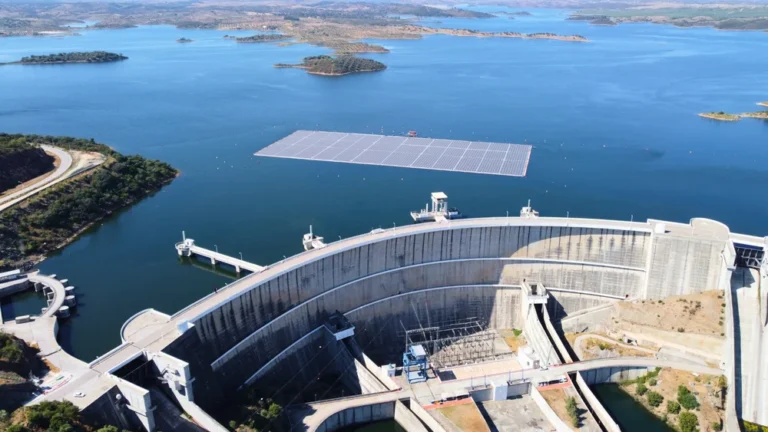
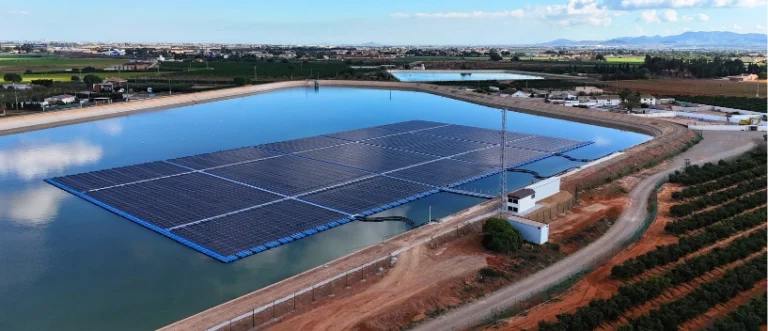
A hybrid floating solar project in operation with hydropower on a drinking water tank, conceived by Canal de Isabel II as a pilot for global roll-out across its reservoirs.
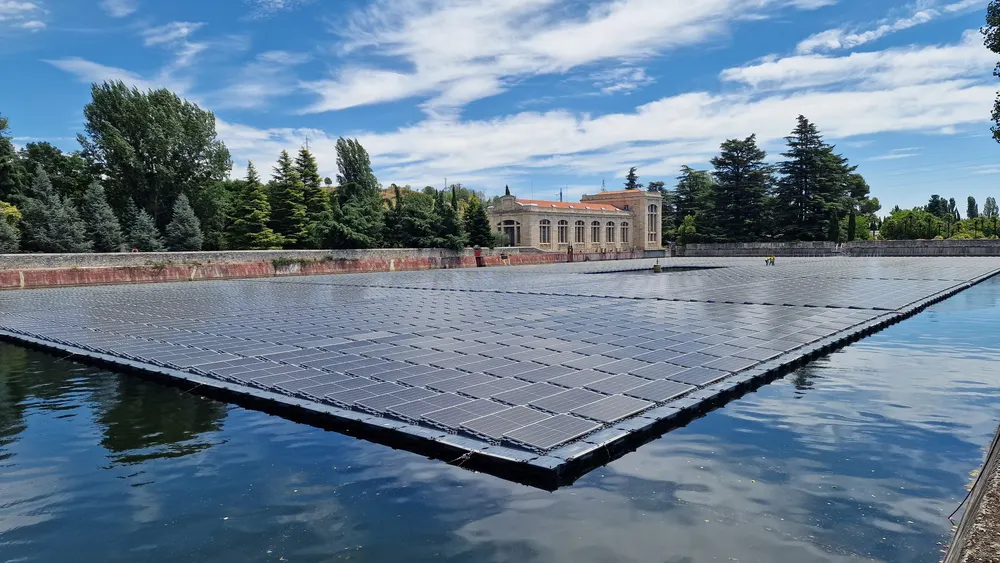
This project, developed by Isigenere and built with Isifloating technology on a 12,000 m² drinking water tank, is a Spanish benchmark for floating energy innovation.
The Torrelaguna Power Station is a historic facility more than a century old, designed to generate hydroelectric power by harnessing the head of the transverse canal. The original installation is out of use, but it still produces clean energy with renewed technology.
It is part of the Canal de Isabel II Solar Plan, which aims to generate clean, renewable energy to cover the organization’s total consumption, reduce grid electricity consumption and minimize CO₂ emissions.
This pilot installation makes it possible to analyze the performance, durability and behavior of floating technology for subsequent implementation on larger reservoirs.
System engineering
Hybrid system: solar + hydropower.
Isigenere designed and supplied the floating system with Isifloating technology, hosting 3,770 solar modules installed over 12,000 m², integrated with the existing hydropower generation. The result is a hybrid renewable system (hydro + solar) that uses the water surface to generate clean energy, freeing up productive land.
The platform is based on a structure of Isifloating floats anchored to the tank walls, with a design optimized to adapt to changes in the environment, allowing controlled movement.
The anchoring and mooring components were selected and tested to facilitate operation and ensurer:
- Resistance to wind and water level changes.
- System maintenance without affecting the aquatic environment.
The floating solar platform was built on the floor of the empty tank, where the Isifloating floats were laid out to withstand both solar exposure and continuous contact with water. Once assembled, the solar modules and the anchoring system were installed on them, ensuring stability under adverse environmental and weather conditions.
The installation required an investment of €2.1 million, funded by the European Union through the REACT-EU program under the Canal de Isabel II Solar Plan.
This public entity seeks to promote renewable energy generation within its own infrastructure, in line with its sustainability and energy efficiency goals..
Results
Benefits for Canal de Isabel II
- Produces energy to supply ~1,400 households/year: energy savings and lower dependence on the conventional grid.
- Optimizes its resources without losing opportunity cost.
- +15% module efficiency thanks to the cooling effect of water, compared with ground-mounted systems.
- Conserves water by preventing evaporation and algae growth through partial surface coverage.
- Reduces CO₂ emissions.
- Promotes the use of clean, renewable energy.
- Assesses technical and operational feasibility for future large-scale installations.
LOCATION